flutter vs react native
If you are trying to decide flutter vs react native, then trust me, you are not alone. So many developers and even business owners are confused about flutter or react native which is better. Some people say react native is easy, some say flutter is fast. And online you will see 100 different opinions, so it becomes even more confusing.
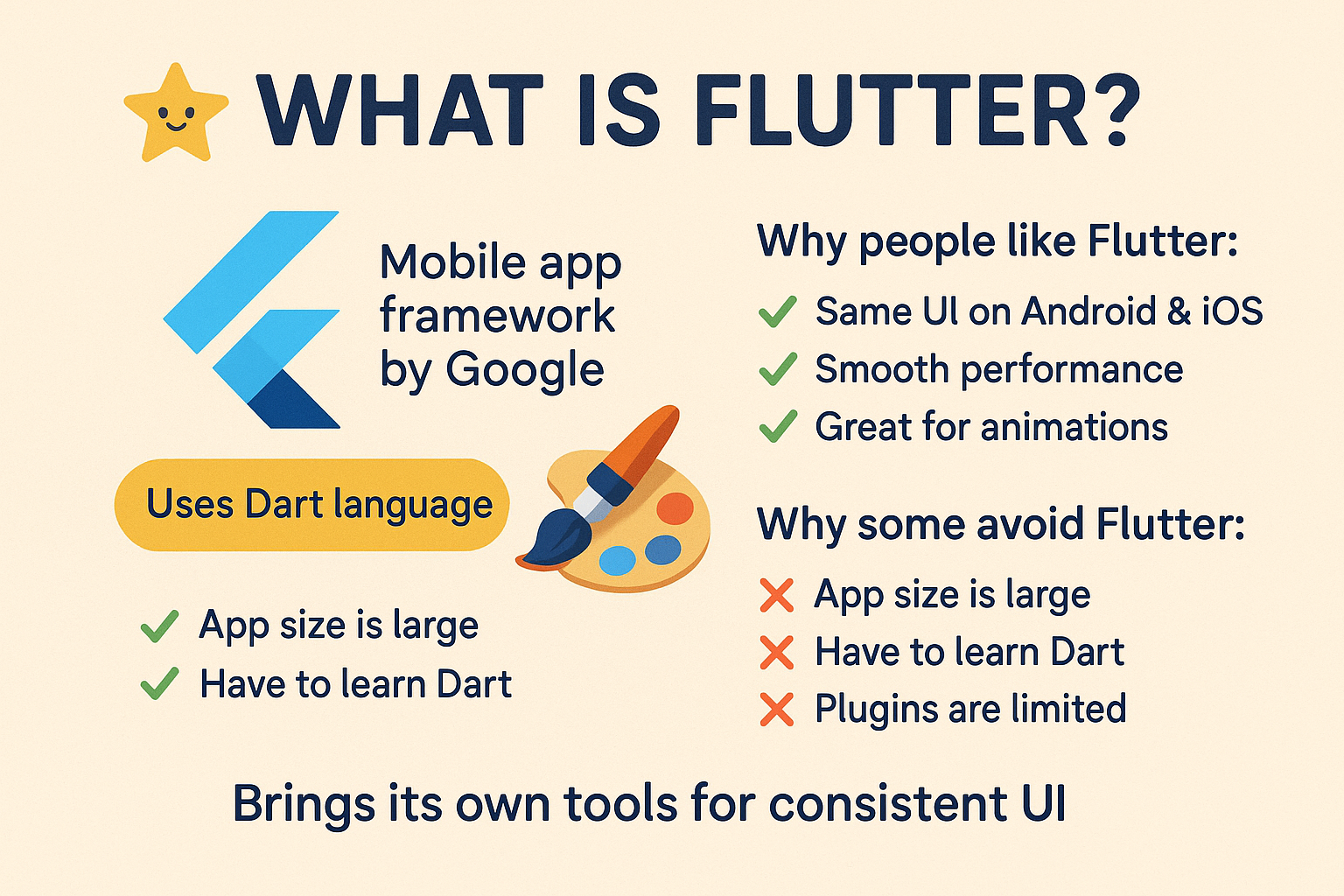
Flutter is a mobile app framework made by Google. It uses a language called Dart. Now don’t worry, Dart is not too hard. It feels simple once you start using it. Flutter comes with its own UI engine, so it creates everything on screen by itself.
Flutter brings its own paint and brushes, so it doesn’t depend on Android or iOS for design. This makes the UI super consistent.
React Native is created by Meta (Facebook). It uses JavaScript, which is one of the easiest languages and very popular among web developers. That’s why many developers start with React Native because they already know React or JavaScript.
React Native uses native mobile components. That means on Android it uses Android buttons, and on iOS it uses iOS buttons. So the app feels natural on both devices.
React Native borrows ready-made mobile components. So you get a natural look without designing everything from scratch.

Here is a very easy table that helps you understand fluter vs react native in one shot:
| Feature | Flutter | React Native |
|---|---|---|
| Language | Dart | JavaScript |
| UI System | Custom UI engine | Native mobile UI |
| Speed | Very smooth | Good but sometimes slow |
| Learning | Medium | Easy |
| App Size | Larger | Smaller |
| Best For | Animation & clean design | Fast development & simple UI |
Now let’s go little deep but still simple. Below I will compare everything one by one so you can decide clearly.
Flutter mostly wins here. Because Flutter compiles the code directly and uses its own rendering engine, animations feel very smooth.
React Native performance is also good, but heavy animations or complex screens sometimes lag. Specially if JavaScript thread gets busy.
If performance is very important → Flutter wins
Flutter gives you beautiful UI because everything is custom. It doesn’t depend on native components.
React Native gives UI that looks natural but sometimes not 100% same on both platforms.
For clean design → Flutter
For native look → React Native
Flutter uses Dart. React Native uses JavaScript.
And JavaScript is almost everywhere, so many people find React Native easier.
Beginner friendly → React Native
React Native community is larger because JavaScript developers are everywhere.
Flutter community is growing fast but still smaller.
More tutorials & help → React Native
Flutter apps are heavy because it includes its own UI engine.
React Native apps are smaller.
If app size matters → React Native
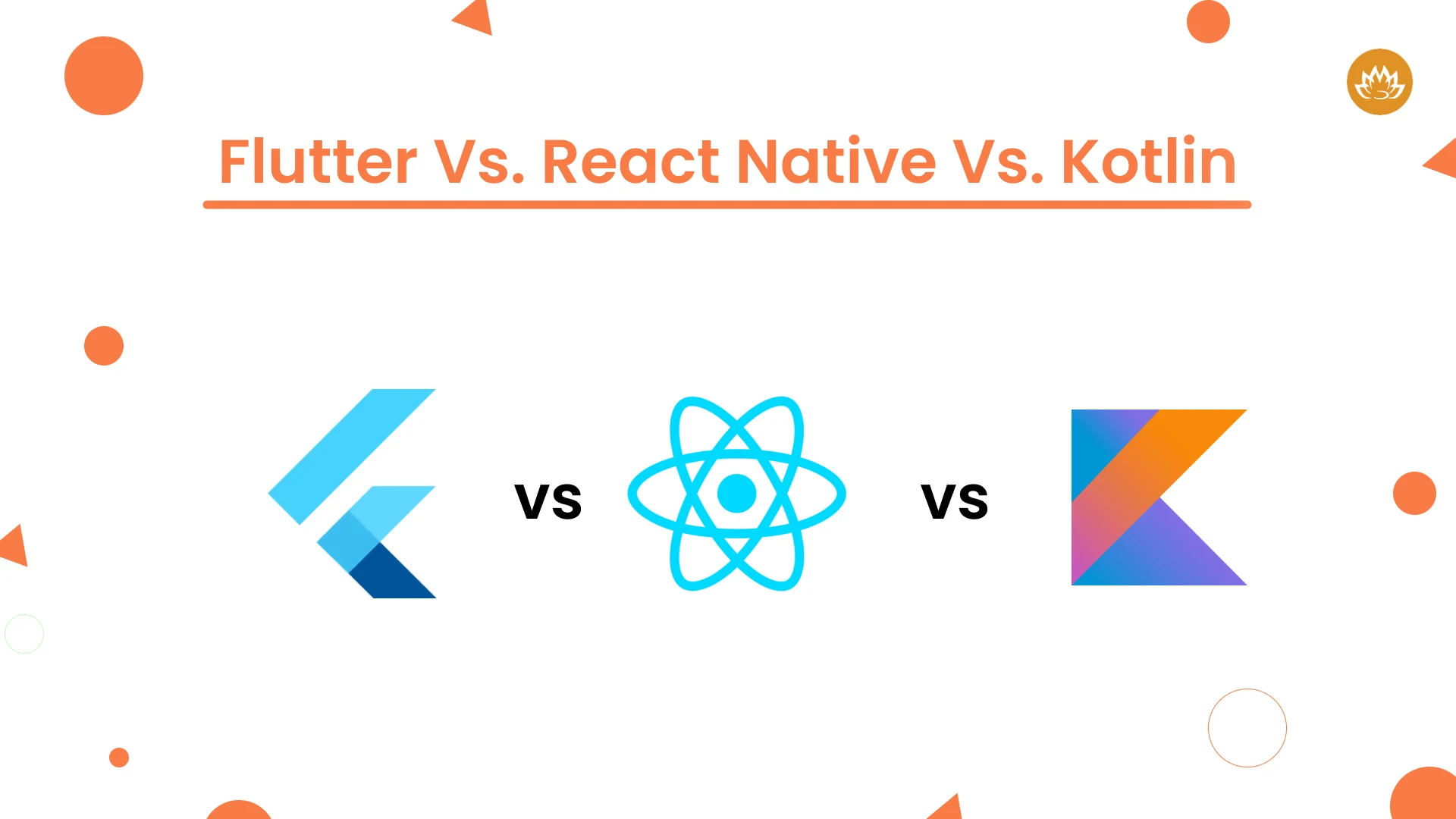
React Native is good for fast development. Flutter is good for smooth UI. If you want to launch MVP fast, pick React Native. If you want amazing UI from day one, pick Flutter.
Native apps are built separately for Android and iOS. This takes more time.
React Native gives you one codebase for both, so it’s faster and cheaper.
Both are good, but the right spelling is Flutter. Still many people search react native vs fluter by mistake.
Flutter is a full mobile framework.
React is a web library.
People confuse them, but they are different things.
React is used for websites. Flutter is used mostly for apps.
If you want to build a mobile app only, Flutter is stronger.
Kotlin is for building native Android apps.
React Native builds Android + iOS apps together.
If you only want Android, Kotlin is great.
If you want cross-platform, React Native wins.
Both can be best depending on your project. Flutter wins in UI and performance. React Native wins in speed and flexibility.